Landmark consultant

Study in Singapore

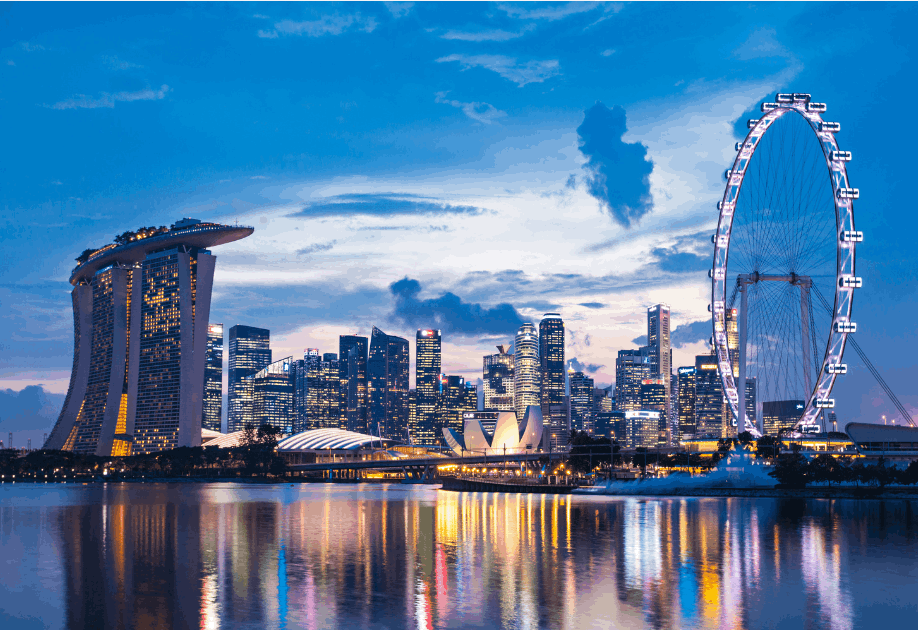
Singapore is a small island city-state situated at the southern tip of the Malay Peninsula. It is separated from Malaysia by the Strait of Johor to the north and from Indonesia by the Singapore Strait to the south. The capital of Singapore is Singapore City. Singapore has four official languages: English, Mandarin Chinese, Malay, and Tamil. English is the primary language of instruction and business. The official currency is the Singapore Dollar (SGD).


Studying in Singapore offers access to high-quality education, a dynamic multicultural environment, and a strategic location in Asia.


Country Facts

The higher education system is structured like the Anglo-Saxon system and offers undergraduate, postgraduate and PhD degrees. The ideal study conditions combined with economic emergence attract many universities from overseas who establish campuses in Singapore in addition to their original ones. Australian universities in particular offer a wide range of study programs in Singapore. Singapore is a multicultural city which attracts people from all over the world. The majority of the population is descended from immigrants. Singapore's population consists of 76% ethnic Chinese, 14% Malaysians and 8% Indians. Singapore is where East meets West. We are the meeting point of the world and studying in Singapore puts you right at the heart of a unique learning experience where there is a blend of social, cultural and educational mix unlike anywhere else in the world. It offers you the sophistication of modern living as well as the richness of an Asian Heritage. Singapore has a rich history, including periods of British colonization and Japanese occupation. It gained independence from Malaysia in 1965, becoming a sovereign nation.

Why Singapore

Singapore is home to several reputable universities and institutions. Research programs and institutions that align with your academic and career goals. Examples include the National University of Singapore (NUS), Nanyang Technological University (NTU), and Singapore Management University (SMU). While English is the primary language of instruction, you may need to demonstrate proficiency through tests like IELTS or TOEFL, especially if English is not your first language.
The academic culture of Singapore aims to provide students with a holistic, broad education. Singapore is an increasingly international country, and from secondary school level emphasises importance of students learning English as a common working language.

Teaching style in Singapore is systematic, pragmatic and instructional, based on pedagogical traditions from both East and West. Examinations are considered necessary and key parts of educational assessment, with professors placing crucial focus on preparing students for exams as thoroughly as possible. Curriculum emphasises understanding and proficiency of specific learning procedures and worked examples to acquaint students with concepts covered in the broadest way possible. Students are pushed to understand what they’re learning as well as why they’re learning it, and so are better equipped to deal with the ‘real-world’ application of class content.

If accepted, you will need to apply for a Student Pass, which is a student visa required for international students studying in Singapore. The institution you are accepted into will assist you in this process.

For Singapore, the institute applies for the visa on behalf of the student. The student has to fill two visa forms :-
Form v36
Form 16

The funds to be shown are :-
Bachelor/ Masters - S$ 30000 (Rs.10 Lakhs approx.)
Diplomas - Rs.5 -10 Lakhs. .

Scholarships in Singapore are often provided by government agencies, educational institutions, and private organizations. Here are some types of scholarships available:

1. Government Scholarships:
Singapore Scholarship for International Students (SgIS): This scholarship is for outstanding students from ASEAN countries pursuing undergraduate studies in selected disciplines.
ASEAN Scholarships: These scholarships are awarded to students from ASEAN countries for secondary, junior college, and pre-university education in Singapore.
2. University Scholarships:
NUS Scholarships: The National University of Singapore (NUS) offers a range of scholarships for undergraduate and graduate students based on academic excellence, leadership qualities, and special talents.
NTU Scholarships: Nanyang Technological University (NTU) provides various scholarships for both undergraduate and graduate students.
SMU Scholarships: Singapore Management University (SMU) offers scholarships for undergraduate students based on academic achievements, leadership potential, and co-curricular activities.
3. Research Scholarships:
A*STAR Scholarships: The Agency for Science, Technology, and Research (A*STAR) provides scholarships for students pursuing research programs in fields such as science and technology.
4. Industry and Sector-Specific Scholarships:
Public Service Commission (PSC) Scholarships: These scholarships are awarded to individuals interested in pursuing a career in the Singapore Public Service. They cover various sectors, including administration, foreign service, and education.
Economic Development Board (EDB) Scholarships: Offered to students interested in contributing to Singapore's economic development.
5. Private Organization Scholarships:
DBS Bank Scholarship: This scholarship is for outstanding individuals pursuing undergraduate studies in fields such as business, economics, and finance.
Keppel Corporation Scholarships: Keppel offers scholarships for students in engineering, environmental studies, and business-related disciplines.
6. Country-Specific Scholarships:
Some countries may have bilateral scholarship agreements with Singapore. Check with the relevant authorities in your home country for information on available scholarships.
7. Sports and Arts Scholarships:
Some universities and organizations offer scholarships for students with exceptional abilities in sports or the arts.
Application procedures are dependent on the type of institutions the students are applying to. In general, one needs to check the application procedures with the educational institution of choice.

In general, the Singapore application process is very simple; following documents are required to apply in Singapore.

Application Fee Draft
Application form
Academic Documents
Passport Copy
Birth Certificate
Passport Size snaps
Work Experience letter ( if applicable)

© Copyright 2024 Landmark Consultant All Rights Reserved

No Code Website Builder